Ions and Ionic Compounds
Ions: When Particles Gain or Lose Electrons
Now that we have a robust model of the neutral atom, we can explore what happens when it, or any particle, gains or loses electrons. When this occurs, the balance between protons and electrons is broken, and the particle becomes an ion: a particle with a net positive or negative charge.
- When a neutral particle loses one or more electrons, it has more protons than electrons. It becomes a positively charged ion, called a cation.
- When a neutral particle gains one or more electrons, it has more electrons than protons. It becomes a negatively charged ion, called an anion.
For example:
- \(\mathrm{Mg} \longrightarrow \mathrm{Mg^{2+}} + 2~e^-\) (A magnesium atom loses two electrons to become a cation)
- \(\mathrm{F} + e^- \longrightarrow \mathrm{F^-}\) (A fluorine atom gains one electron to become an anion)
We often use variations of cation and anion out of convenience. For example, a Mg2+ ion can be referred to as a dication or an O2− ion could be referred to as a dianion. These descriptive variations are not IUPAC compliant but are widely used in the scientific community.
Notice that when writing the charge, the number comes first followed by the sign. This is a strict notation that follows IUPAC rules. A numeral of “1” is omitted.
Individual atoms can become ions (called monatomic ions). There can exist molecular entities with an overall charge (called polyatomic ions).
For example:
- Na+ is a monatomic ion
- NH4+ is a polyatomic ion (the positive charge belongs to the entire NH4 entity)
Predicting Ion Formation of Elements using the Periodic Table
If you look at Group 18 of the periodic table, you will find the noble gases: helium, neon, argon, and so on. These elements are famously unreactive. They rarely, if ever, form compounds with other elements. Why? They possess a uniquely stable electron configuration. Their outermost electron shells are completely full. This stability is like a chemical state of contentment, and in many ways, the other elements on the table are striving to achieve it.
The tendency of an atom to gain or lose electrons to form an ion is driven by this quest to attain the stable electron count of a noble gas. By looking at an element’s position on the periodic table, we can predict whether it will form an ion and what its charge will be.
Notice how many metals can adopt only a single type of positive charge. These metals are referred to as Invariant–Charge Metals (or simply Invariant) as they most always adopt one charge. Most other metals (including most of the transition metals) can readily adopt more than one charge and are referred to as Multivalent.
Metals and the Formation of Cations
Let’s look at the elements on the left and in the center of the periodic table. These are the metals. A sodium atom (Na), for instance, sits in Group 1. It has just one electron in its outermost shell, its single valence electron. To achieve the stability of a noble gas, it has two theoretical options: it could try to gain seven more electrons to fill its current shell, or it could simply lose its one valence electron.
Losing one electron is far more favorable energetically. When a sodium atom loses that electron, it becomes a sodium ion. Because it has lost a negatively charged electron, the ion now has an overall positive charge. We write this as Na+. A positively charged ion is called a cation. More importantly, by losing that single electron, the atom’s now outermost shell is the one underneath, which is full. The Na+ ion has the exact same stable electron configuration as the noble gas neon (Ne).
This pattern holds true for other metals in the main groups:
- Group 1 Metals (Alkali Metals) consistently lose one electron to form cations with a 1+ charge (e.g., Na+, K+, Li+).
- Group 2 Metals (Alkaline Earth Metals) lose their two valence electrons to form cations with a 2+ charge (e.g., Mg2+, Ca2+).
- Group 13 Metals (Boron Group), like aluminum, lose their three valence electrons to form cations with a 3+ charge (e.g., Al3+).
In each case, the metal atom sheds its few valence electrons to achieve the electron configuration of the noble gas from the period just above it.
Nonmetals and the Formation of Anions
Now, let’s turn our attention to the nonmetals on the upper right side of the periodic table. These elements have the opposite situation. Consider chlorine (Cl) in Group 17. It has seven valence electrons, just one electron short of a full shell. To achieve stability, it could either lose all seven electrons or gain just one.
Gaining one electron is the much easier path. When a chlorine atom gains an electron, it becomes a chloride ion. Since it has gained a negatively charged particle, the ion has an overall negative charge, written as Cl−. A negatively charged ion is called an anion. By gaining this electron, the chloride ion now has eight valence electrons (a stable octet) and has achieved the same electron configuration as the noble gas argon (Ar).
This trend is consistent for other nonmetals:
- Group 17 Nonmetals (Halogens) gain one electron to form anions with a 1− charge (e.g., F−, Cl−, Br−).
- Group 16 Nonmetals (Chalcogens) are two electrons shy of a full shell, so they tend to gain two electrons, forming anions with a 2− charge (e.g., O2−, S2−).
- Group 15 Nonmetals (Pnictogens), like nitrogen, need three electrons, so they can gain three to form anions with a 3− charge (e.g., N3−).
In essence, atoms will form ions in the most direct way possible to achieve the electron configuration of their nearest noble gas. Metals lose electrons to get there, while nonmetals gain them. This simple yet powerful concept is the foundation for understanding how ionic compounds form.
Transition Metals
Most transition metals (Groups 3–12) very often adopt more than one charge depending on their surrounding chemical environment. The most common charges some of these elements adopt are provided in the figure a few sections above. We say that these elements are multivalent.
While most transition metals are multivalent, a few reliably form only one common ion in compounds. These metals are treated as invariant-charge metals. You should memorize the charges for the following:
| Element | Symbol | Charge | Rationale / Why it’s Invariant |
|---|---|---|---|
| Zinc | Zn | 2+ | Loses its two 4s valence electrons to form a stable [Ar]3d10 configuration |
| Silver | Ag | 1+ | Loses its single 5s valence electron to form a stable [Kr]4d10 configuration |
| Cadmium | Cd | 2+ | Loses its two 5s valence electrons, following the pattern of Zinc. |
| Scandium | Sc | 3+ | Loses all three valence electrons (4s23d1) to achieve a stable noble gas configuration |
Note that Scandium is included for completeness. However, this element is rarely encountered in typical general chemistry courses. You should memorize the “Big Three”: Zn2+, Ag+, and Cd2+.
There are edge cases where these transition metals can adopt a charge other than what I have shown here; however, those are quite exotic and the scientific community commonly refers to these elements as being invariant.
An Introduction to Ionic Compounds
The strong attraction between a positive ion and a negative ion can form an ionic bond. The result is very typically a neutral ionic compound. Nature always seeks stability, and this often means forming a compound where the total positive charge from the cations is perfectly balanced by the total negative charge from the anions.
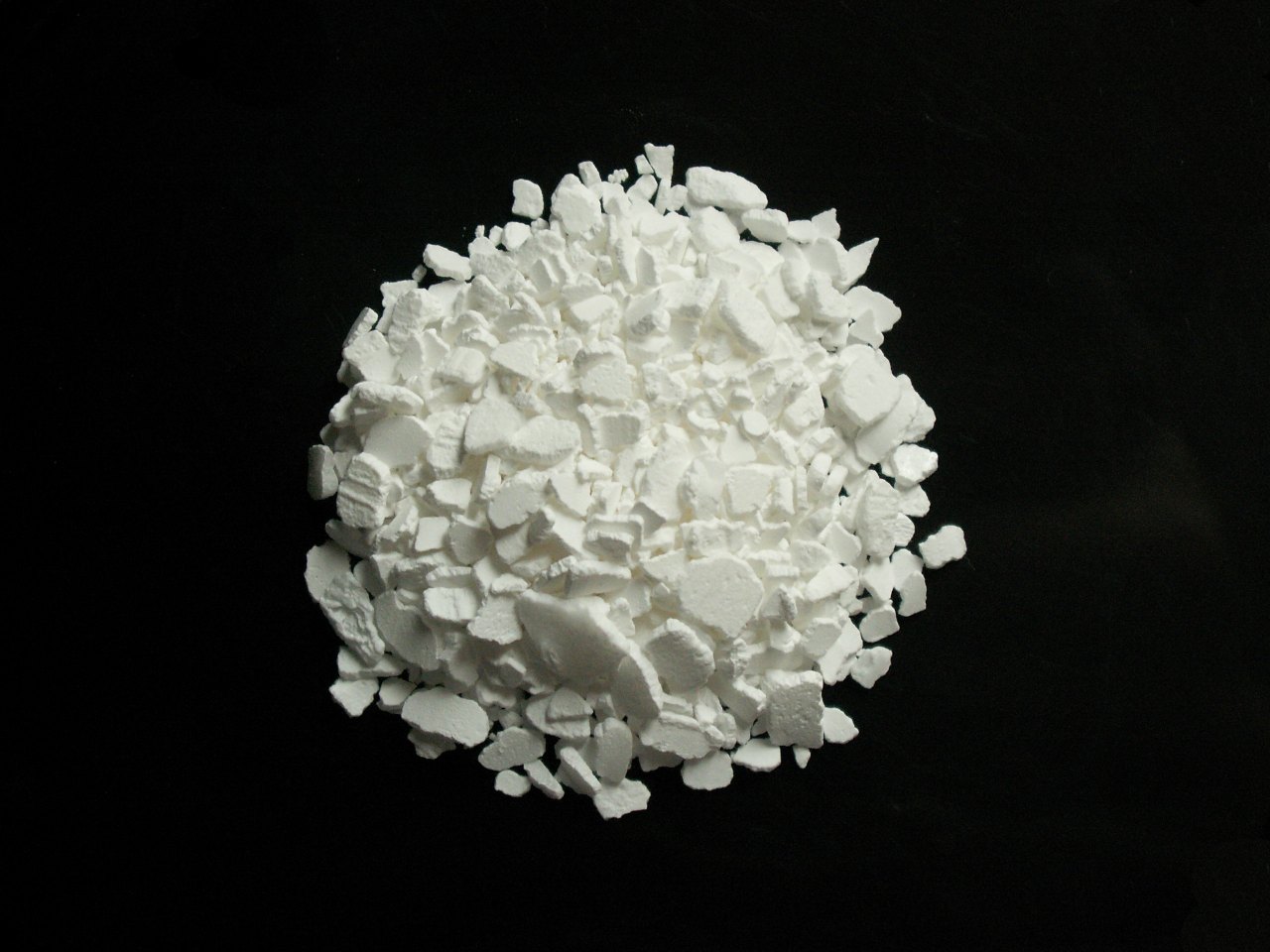
For example, a calcium cation (Ca2+) and a chloride anion (Cl−) can combine. To achieve a neutral compound (a compound with an overall charge of 0), two chloride ions are needed to balance the 2+ charge of the single calcium ion, forming calcium chloride, CaCl2, an ionic compound (an inorganic salt).

\[\textrm{Ca}^{2+} + 2~\textrm{Cl}^- \longrightarrow \textrm{CaCl}_2\]
A Step-by-Step Method for Determining Ionic Formulas
To determine the correct chemical formula, we will find the smallest number of each ion needed to bring the net charge of the compound to zero.
Step 1: Identify the Cations and Anions and their Respective Charges. You must know the symbols and stable charges of the ions being combined. According to IUPAC convention, the cation (typically a metal) is always written first in the formula.
Step 2: Find the Total Charge Required for Neutrality. To balance the charges, we need to find the smallest total positive and total negative charge that will sum to zero. This value is mathematically equivalent to the least common multiple of the absolute values of the ion charges.
Step 3: Determine the Number of Each Ion Needed. Divide the total charge (from Step 2) by the charge of each individual ion. This calculation gives you the number of cations and anions (and thus their subscripts) required for the neutral compound.
Step 4: Write the Final Chemical Formula. Write the symbol for the cation first, followed by its subscript (if greater than 1). Then, write the symbol for the anion, followed by its subscript (if greater than 1). Subscripts of ‘1’ are always omitted.
This process of forming and naming compounds is a critical skill, which we will explore in detail next.
Examples in Practice
Let’s apply this method to several examples, including cases that require careful attention.
Example: The compound formed between aluminum (Al3+) and oxygen (O2−).
- Ions and Charges: Cation is Al3+; Anion is O2−.
- Total Charge for Neutrality: The least common multiple of 3 and 2 is 6. Therefore, we need a total positive charge of +6 and a total negative charge of 6−.
- Number of Ions:
- Number of Al3+ ions needed: (6+ total charge) / (3+ charge per ion) = 2
- Number of O2− ions needed: (6− total charge) / (2− charge per ion) = 3
- Final Formula: The ratio is 2 aluminum ions to 3 oxide ions. The formula is Al2O3.
Example: The compound formed between magnesium (Mg2+) and sulfur (S2−).
- Ions and Charges: Cation is Mg2+; Anion is S2−.
- Total Charge for Neutrality: The least common multiple of 2 and 2 is 2. We need a total charge of 2+ and 2−.
- Number of Ions:
- Number of Mg2+ ions needed: (2+ total charge) / (2+ charge per ion) = 1
- Number of S2− ions needed: (2− total charge) / (2− charge per ion) = 1
- Final Formula: The ratio is 1:1. The formula is MgS. Notice that this method directly provides the simplest whole-number ratio without needing a separate simplification step.
Applying the Principle to Compounds with Unique Ions
The principle of charge neutrality is universal and is essential for correctly writing formulas for compounds containing less common, but important, ions. In these cases, it is critical to recognize the ion as a single, unbreakable unit with a specific charge.
Example: The compound formed between sodium (Na+) and the peroxide ion (O22−).
- Ions and Charges: The cation is Na+. The anion is the peroxide ion, O22−. The subscript ‘2’ is part of the ion’s identity and cannot be altered. The entire O2 unit has a 2− charge.
- Total Charge for Neutrality: The least common multiple of 1 and 2 is 2. We need a total charge of 2+ and 2−.
- Number of Ions:
- Number of Na+ ions needed: (2+ total charge) / (1+ charge per ion) = 2
- Number of O22− units needed: (2− total charge) / (2− charge per unit) = 1
- Final Formula: We need two Na+ ions and one O22− unit. The formula is Na2O2. It would be incorrect to simplify this to NaO, as that would not represent the peroxide ion.
Example: The compound mercury(I) chloride, formed from the mercury(I) ion (Hg22+) and the chloride ion (Cl−).
- Ions and Charges: The cation is the unique mercury(I) ion, Hg22+. This diatomic ion acts as a single unit with a 2+ charge. The anion is Cl−.
- Total Charge for Neutrality: The least common multiple of 2 and 1 is 2.
- Number of Ions:
- Number of Hg22+ units needed: (2+ total charge) / (2+ charge per unit) = 1
- Number of Cl− ions needed: (2− total charge) / (1− charge per ion) = 2
- Final Formula: We need one Hg22+ unit and two Cl− ions. The formula is Hg2Cl2. The subscript ‘2’ on Hg is integral to the cation’s identity and must not be changed.